
Phnom Penh for remote workers and digital nomads in 2026
Why Phnom Penh has become a base for remote workers, plus the practical picture: visas, cost, wifi, coworking, neighbourhoods and community.
Updated 20 Oct 2026
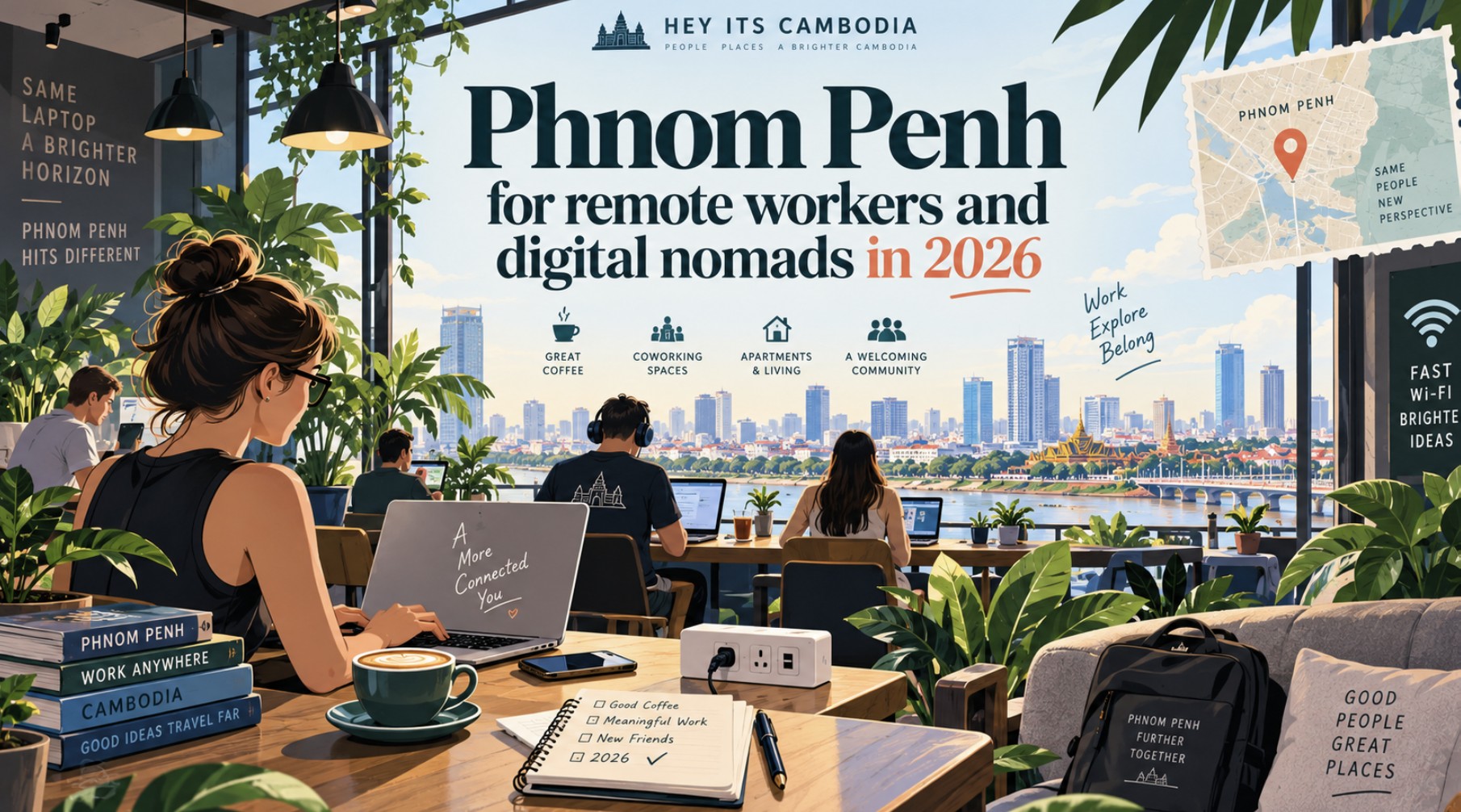
Phnom Penh isn't the obvious digital-nomad city, and that's why a growing number of remote workers have moved here: it's cheaper than Bangkok, less saturated than Bali or Da Nang, and the visa situation is unusually relaxed. Here's the practical picture for 2026.
The visa advantage
Cambodia's E-class ("ordinary") visa can be extended almost indefinitely from inside the country in six- or twelve-month blocks (as the EB extension), without the border runs or employer sponsorship other countries require. Enter on the E-class visa rather than the tourist (T-class) visa if you plan to stay and extend, because converting later is more work. Use a reputable local visa agent for the extension; it's routine and inexpensive.
Cost of a month
- One-bedroom serviced apartment in BKK1 or Tonle Bassac with pool and gym: US$450–800/month
- Coworking hot desk: US$80–140/month; dedicated desk US$150–220
- Eating a mix of local and western: US$300–600/month
- SIM data / home fibre: US$5–15 / US$15–25 per month
A comfortable all-in monthly budget is roughly US$1,100–1,900 depending on how much western food and how many cocktails.
Connectivity
Mobile data (Smart, Cellcard, Metfone) is fast and cheap, and works as a reliable backup. Fixed fibre in newer buildings is solid; older buildings can be patchy, so test the connection before signing a lease. Power cuts happen but are usually short; a lot of cafés and all coworking spaces have backup.
Where to base yourself
- BKK1, the default. Walkable, dense with cafés and coworking, the biggest long-stay community. Highest rents.
- Tonle Bassac, newer towers, serviced apartments with amenities, slightly cheaper, more riding between places.
- Tuol Tom Poung, cheaper, more local, a strong independent café scene, good for a longer and quieter stay.
Working rhythm
The heat and the afternoon rain (May–October) push people into an early start, a midday break, and an evening session. Cafés are quietest before 10am. See work-friendly coffee shops for air-conditioning, sockets and wifi.
Community
Smaller than Chiang Mai's or Canggu's, but active: coworking spaces run events, there are Telegram and Facebook groups for newcomers, and the long-stay crowd clusters in a handful of BKK1 cafés and bars. It's easy to meet people precisely because the scene is compact.