
Getting around Phnom Penh in 2026
PassApp, Grab, tuk-tuks, walking and the airport run: how transport actually works in Phnom Penh now, plus what it costs.
Updated 20 Oct 2026
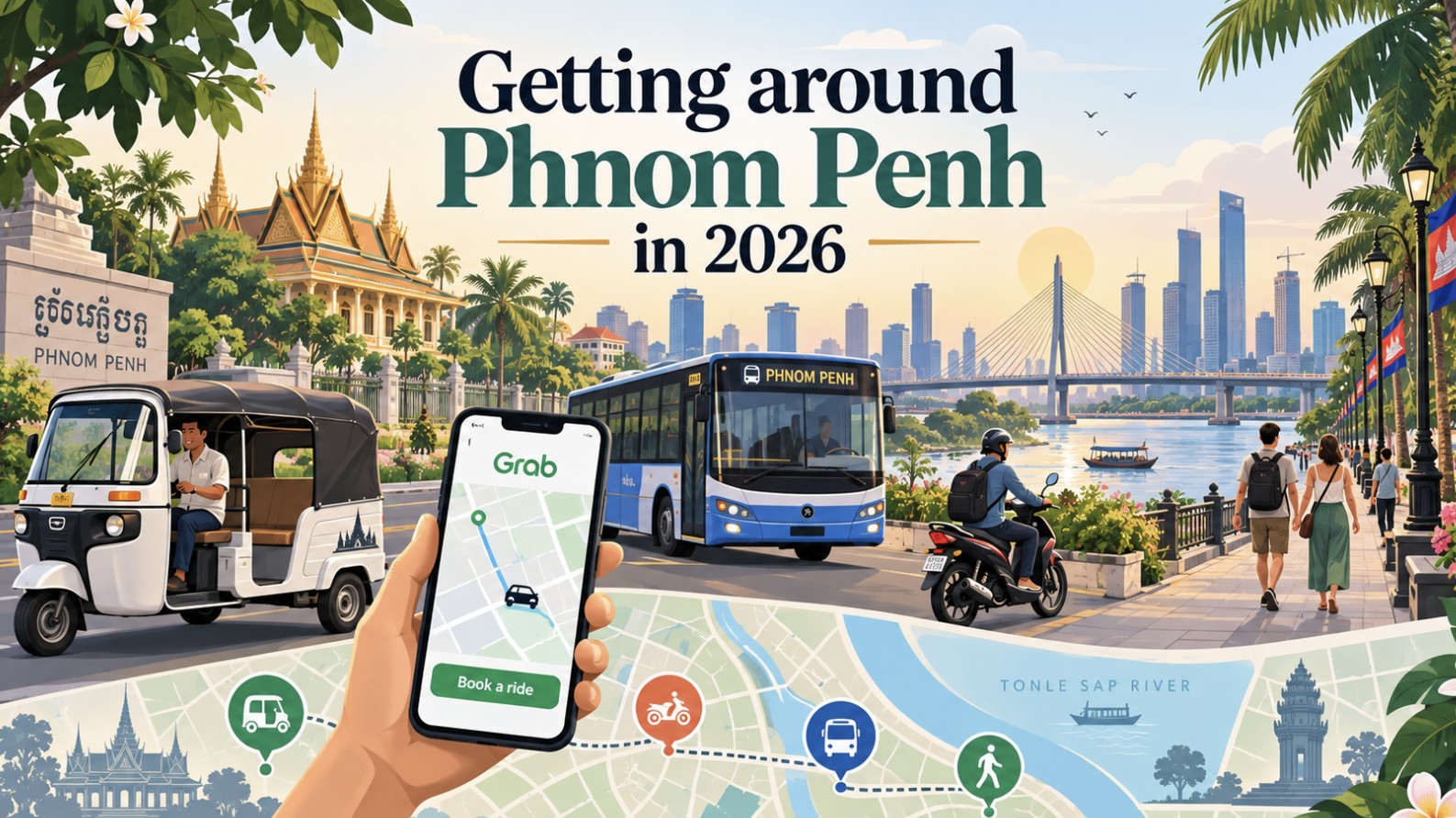
Phnom Penh has no metro and limited public buses that visitors use, so getting around means ride-hailing apps, tuk-tuks and your feet. It's cheap and straightforward once set up.
The two apps to install
- PassApp, the local favourite. Books metered tuk-tuks (small enclosed rickshaws) and cars. Cheapest option for most trips. Fares show before you confirm.
- Grab, regional app, strong car coverage, handy in the heat and for airport runs. Slightly pricier than PassApp tuk-tuks.
Both take cash or a linked card. Typical central fares: US$1.50–3 for a short tuk-tuk hop, US$3–5 for a longer cross-town car ride.
Street tuk-tuks
The larger "remork" tuk-tuks (a motorbike pulling a carriage) still wait outside hotels and markets. Agree the price before you get in. Expect to pay a bit more than the app rate, and more again for tourist-heavy pickup points. They're good for groups, luggage, or a half-day of sightseeing where you keep the same driver.
The airport run
Techo International Airport is ~20 km south of the centre, so a transfer is 45–60 minutes and costs more than a city ride, roughly US$15–25 by car depending on time and traffic. Options: fixed-rate airport taxi, pre-booked hotel car, or Grab/PassApp from the terminal. Book ahead for late arrivals.
Walking
The riverfront promenade and parts of BKK1, Daun Penh and Tuol Tom Poung are pleasant on foot, especially after 4pm. Pavements are uneven and often occupied by parked bikes and stalls, so watch your step, and cross roads at a steady, predictable pace so traffic can flow around you.
Renting a motorbike
Possible, and cheap, but Phnom Penh traffic is dense and the rules are informal. Only ride if you're already confident in Southeast Asian cities, carry an appropriate licence, always wear a helmet, and avoid riding at night. For most visitors, ride-hailing is easier and safer.
Money for transport
Keep small US dollar notes and some riel for cash fares and tips. Apps let you pay by card, but drivers appreciate a rounded-up cash fare, and street tuk-tuks are cash only.
A realistic day of movement
Breakfast near the hotel (walk), a museum in the morning (10-minute tuk-tuk), lunch and a long coffee in one district (walk between them), a rooftop for sunset (car), dinner nearby (walk), home (tuk-tuk). Total transport spend: often under US$10. Use the directory's area filter to cluster your day into one or two neighbourhoods and cut the riding further.