
Phnom Penh in 2026: what changed and what to expect
A new airport an hour out of town, higher prices, a maturing coffee and dining scene, and a bigger remote-work crowd. What is actually different about visiting Phnom Penh in 2026.
Updated 20 Oct 2026
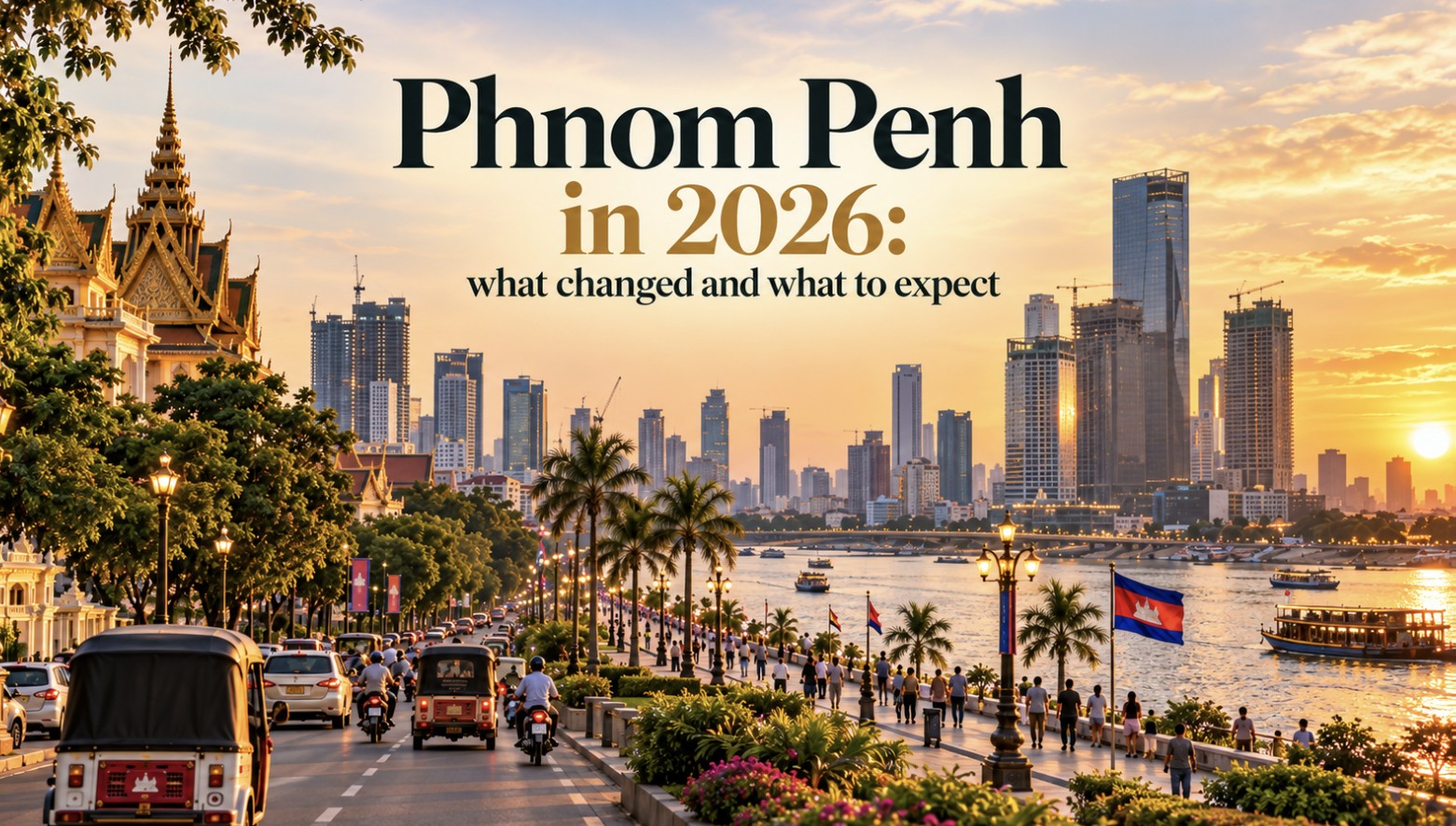
Phnom Penh has moved quickly since the pandemic years. If your last trip was in 2019 or 2022, several things will feel different in 2026, from how you arrive to what a flat white costs. This is the short version of what changed, and what it means for a trip.
You now land far from the city
The big structural change is Techo International Airport, which took over the bulk of commercial traffic from the old Pochentong airport in 2025. It sits roughly 20 km south of the centre, near Kandal, so the airport transfer is now a 45–60 minute drive rather than 20 minutes. Budget accordingly: arrivals late at night mean a longer, quieter road into town, and a fixed-price taxi or a pre-booked hotel car is worth it for a first night. Ride-hailing apps work from the airport but the pickup zones change often, so follow the signs and the app's instructions.
Prices have caught up
Phnom Penh is still cheap by regional standards, but the "two dollars for everything" era is over in the central districts. A specialty coffee is now typically US$3–4.50, a sit-down Khmer meal for two with drinks runs US$18–35, and a good mid-range room is US$40–70. Street food, local markets and the outer neighbourhoods have moved far less: a bowl of kuy teav is still around US$2–3. The gap between "expat-facing" and "local" pricing has widened, which is useful to know when you plan a day.
The dining scene grew up
Modern Cambodian cooking is the clearest trend. A wave of chefs (several trained abroad or in Siem Reap's fine-dining kitchens) have opened rooms in Phnom Penh that treat regional Khmer dishes seriously rather than as a tourist set menu. Alongside that, the city has a deep bench of Indian, Japanese, Chinese and French restaurants, many long-running. Browse the full Phnom Penh directory or jump to Khmer & local for the Cambodian side.
Coffee is a real scene now
In 2019 "coffee culture" mostly meant iced coffee with condensed milk from a cart. That is still excellent and still everywhere. In 2026 the city also has proper specialty roasters, single-origin pour-overs, and a batch of quiet cafés built for a laptop afternoon. Local chains like BROWN and TUBE have expanded to dozens of branches. See the best coffee shops and the chains and brands.
More remote workers, more infrastructure for them
Phnom Penh has quietly become a base for remote workers priced out of Bangkok and Bali. That has brought more coworking spaces, reliable fibre in newer buildings, and cafés that don't mind you staying two hours. It has also pushed up rents in BKK1 and Tonle Bassac, the two districts most of that crowd chooses.
Getting around is app-first
PassApp and Grab cover the city well. Metered tuk-tuks (the enclosed "PassApp" rickshaws) are cheap, and remork (trailer) tuk-tuks still work for groups or luggage. Cash is still king for street vendors and markets, but cards and QR payments (KHQR) are now accepted in most restaurants and cafés.
What to expect, in one paragraph
Plan a longer airport transfer, carry some US dollars in small bills plus a card, expect central prices closer to Vietnam than to 2019 Cambodia, and know that the food and coffee are genuinely good now. The rest of this guide series covers arrival, neighbourhoods, budget, transport and itineraries in detail.